

This is the second part in a series that will analyse how Glasner will fit at Forest. This post is available to paid subscribers, please consider a subscription to support my work. You can read Part 1 here. Thanks!
How Does Game State Affect Glasner’s Teams?
The first big difference last season between Oliver Glasner’s Crystal Palace and Nottingham Forest last season, was the London sides’ ability to keep games within reach.
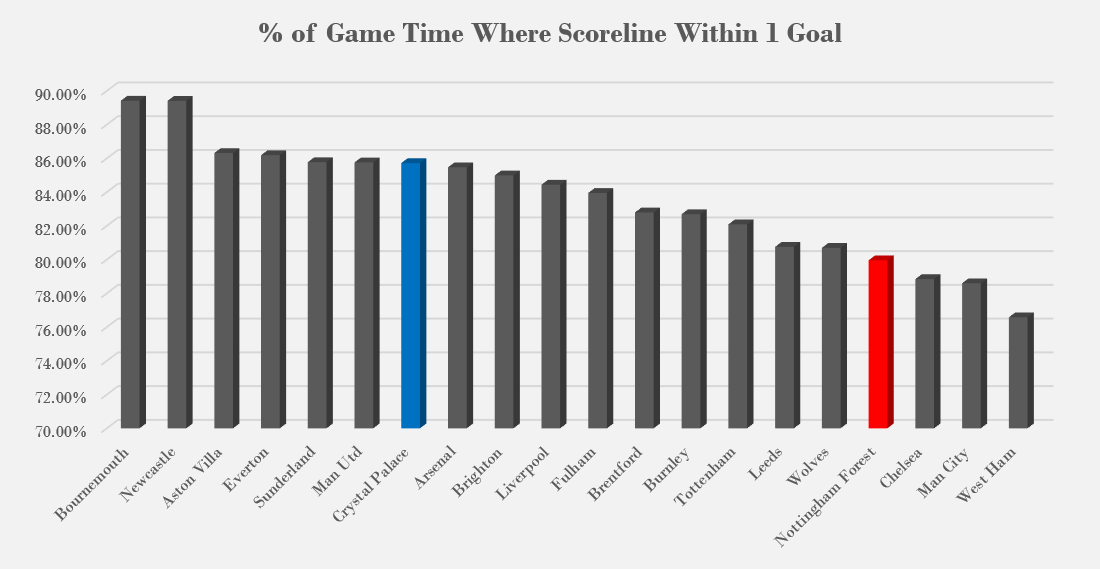
Crystal Palace matches had a scoreline within 1 goal for over 85% of game time last season - this ranked 7th in Premier League - this is largely due to Palace spending 53% of their season drawing, 3rd highest in the division.
Forest’s own percentage on keeping games in the balance was lower than 80%, and ranked 17th. This reflected Forest’s bipolar performances throughout the season, where they were almost equally as likely to get a multi-goal lead as they were to concede goals in quick succession.
This data paints a picture of a team who wants to keep the game close for as long as possible, the figure of 85% is actually a decrease from the 87% of the 2024/25 season - far higher again from Forest’s own figure of 79%. Interestingly, it’s also a massive increase on the figure of 67% Glasner oversaw during his final season at Frankfurt - during which the percentages for each different game state were all in the 30s.
Keeping the game in the balance doesn’t necessarily mean that Glasner asked Palace to play in a negative way though.
Glasner Asks His Team for Consistency Regardless of Game State
We can perhaps explain why Palace & Glasner want to keep things tight - because regardless of the game state, their chance quality is some of the best in the Premier League.