

Sean Dyche was appointed with somewhat of a reputation suggesting that he would make Forest solid again, but the biggest difference would be that he’d finally have resources within a squad that he’d never had the pleasure of working with before.
After some great results initially, Forest have now lost 4 Premier League games in a row, looking pretty poor in 3 of them. Let’s dig into the numbers of the 12 domestic games Dyche has taken control of.
Average Action Height
This chart looks at the average location of on-ball actions for each team split into 5 minute segments. ‘50’ represents the half-way line. What we’ll see across the vast majority of these charts, is a clear intent from Dyche asking Forest to ease their way into matches. In the opening 5 minutes of games, Forest’s average action is just outside of their own defensive third. This ‘height’ ramps up through the game, where Forest are regularly in control of territory for the middle half of the game.
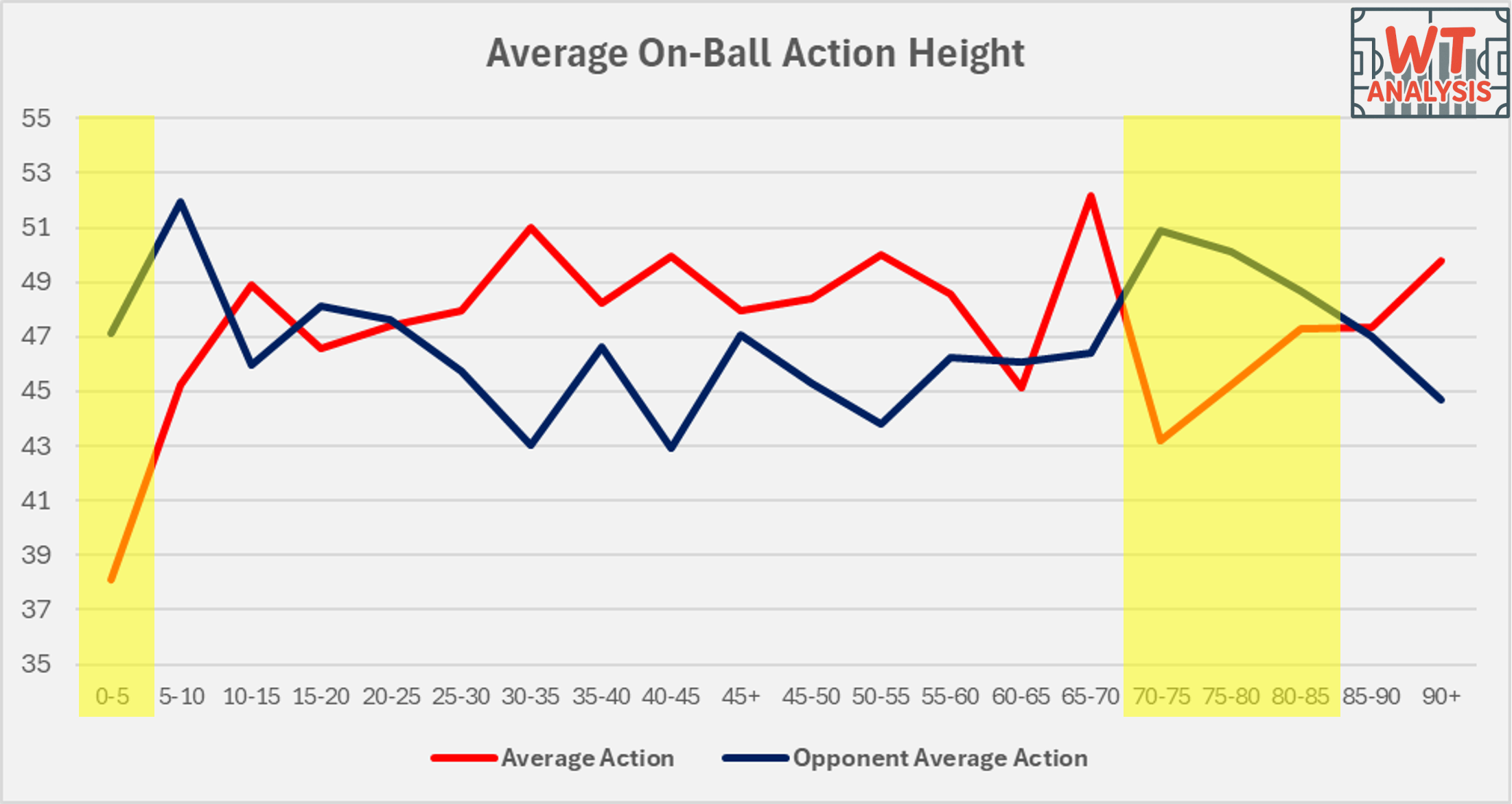
However, there’s a clear drop off from Forest around the 70th minute - perhaps not coincidentally the exact same minute as Dyche’s average substitution. This points toward two things…
Firstly, that Dyche is right when he says the Forest players have not been fit enough. And secondly, something that many of us have thought in recent weeks, that Dyche is taking too long to make personnel and/or tactical changes.
Passes Faced per Defensive Action
You’ll notice again here that Forest are very passive in the opening 30 minutes of matches, both compared to their own levels later in games, but also that of their opponents.
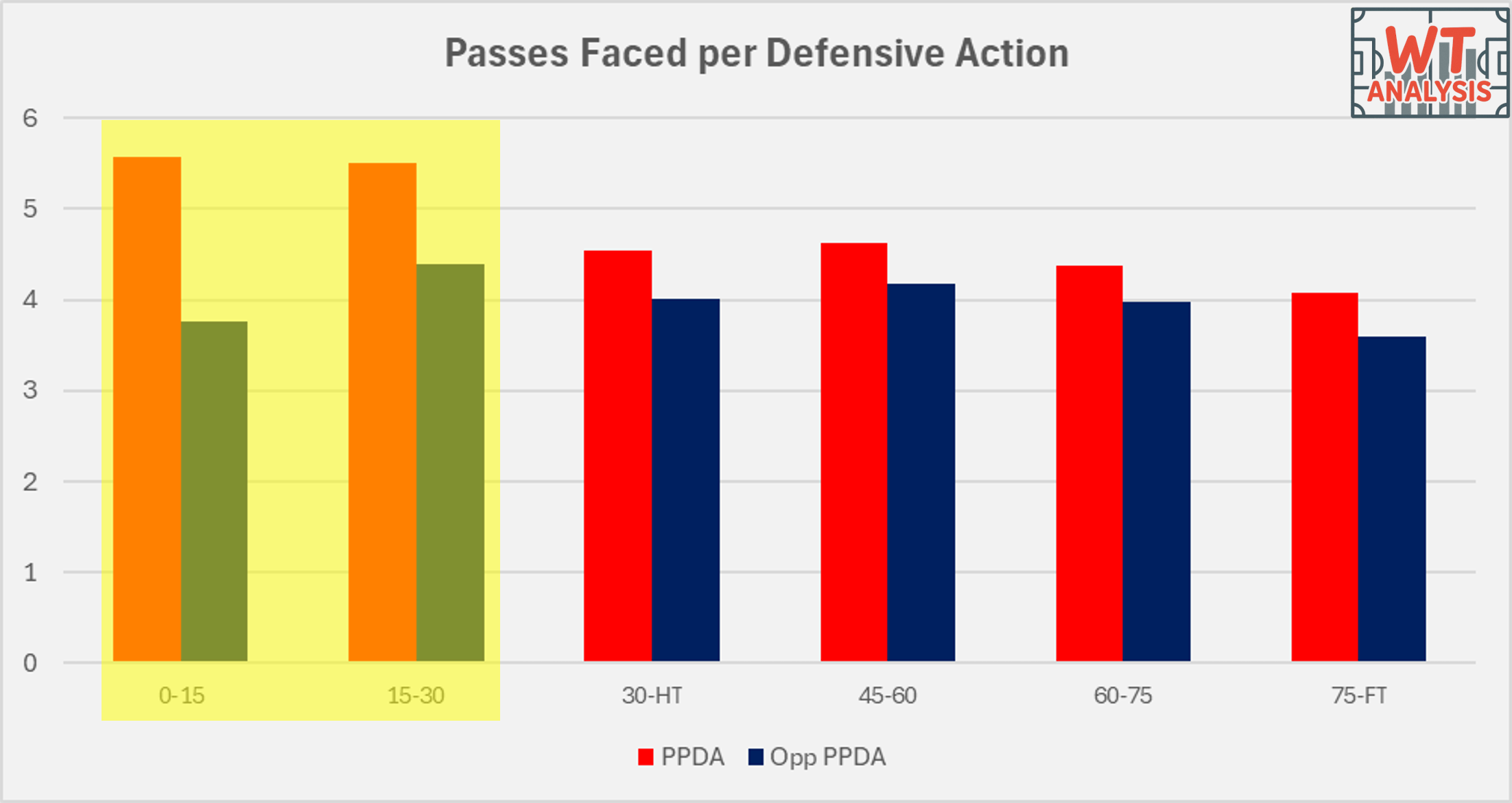
PPDA is a metric used to measure the intensity of a team’s press - I only have event level data, so it isn’t as accurate as I’d like it to be, but it still paints a good picture. This is calculated by taking a team’s defensive actions and comparing that with the number of passes their opponent attempts.
This again suggests a ‘keep it tight’ mentality from Dyche in the early stages of games. But is it actually working?
Shots Attempted & Faced, Chance Quality & General Creativity
Perhaps surprisingly, despite being pretty passive in the first half an hour, the shot totals are level at 47-47 during that period in matches. Then, as Forest tend to try and open up a little and be more proactive toward the end of a half, they get out-chanced. This has been a huge problem in recent weeks, and has largely been why Forest have been struggling so much for points as they concede such poorly timed goals.
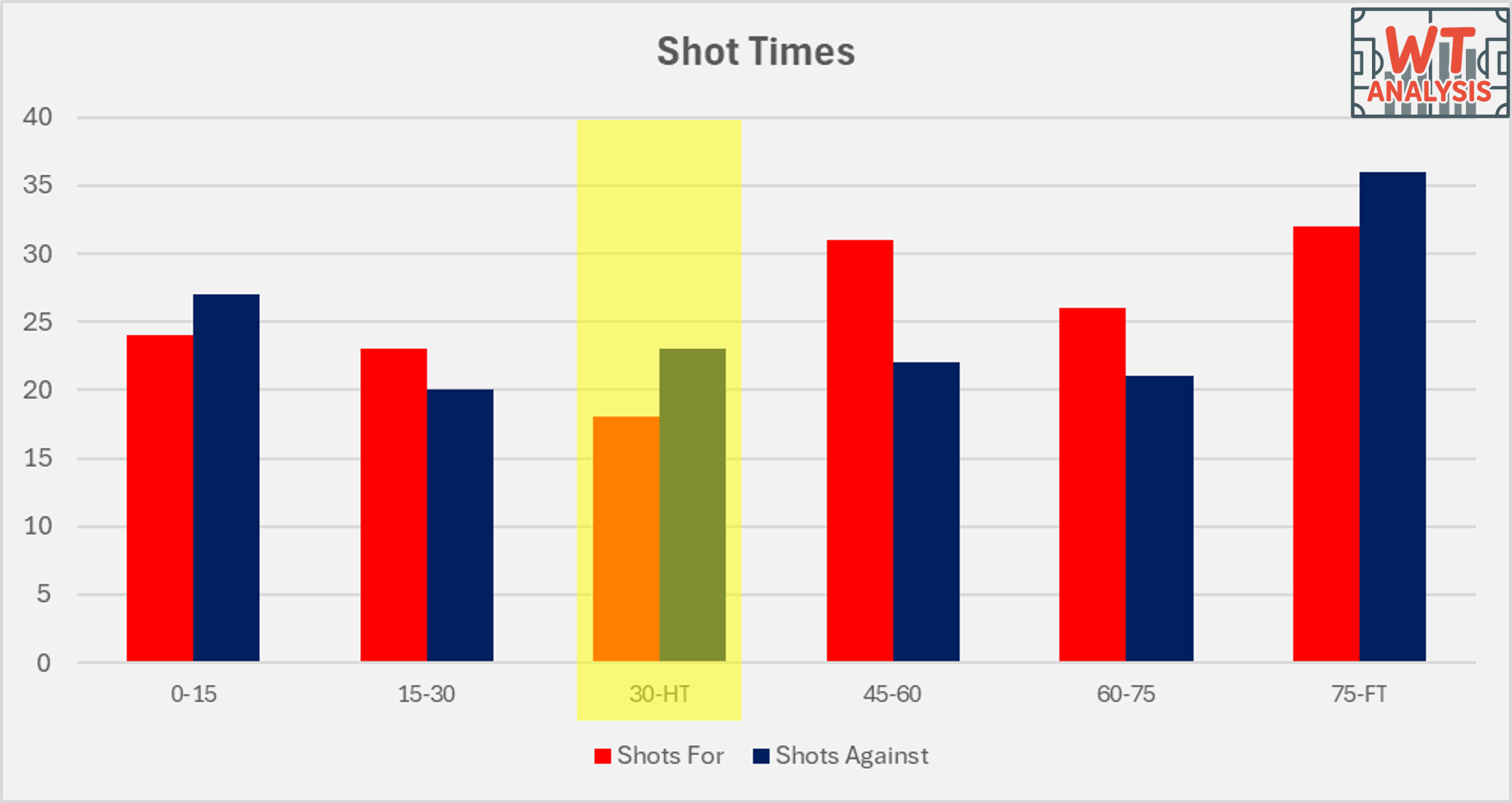
Forest then do seem to take control a little bit during the second half, before the aforementioned fall-off that could potentially be related to Dyche’s lack of in-game changes. It should also be noted that Forest have only been ahead at half-time twice in Dyche’s 12 matches, which could also explain the higher shot activity during the second half.
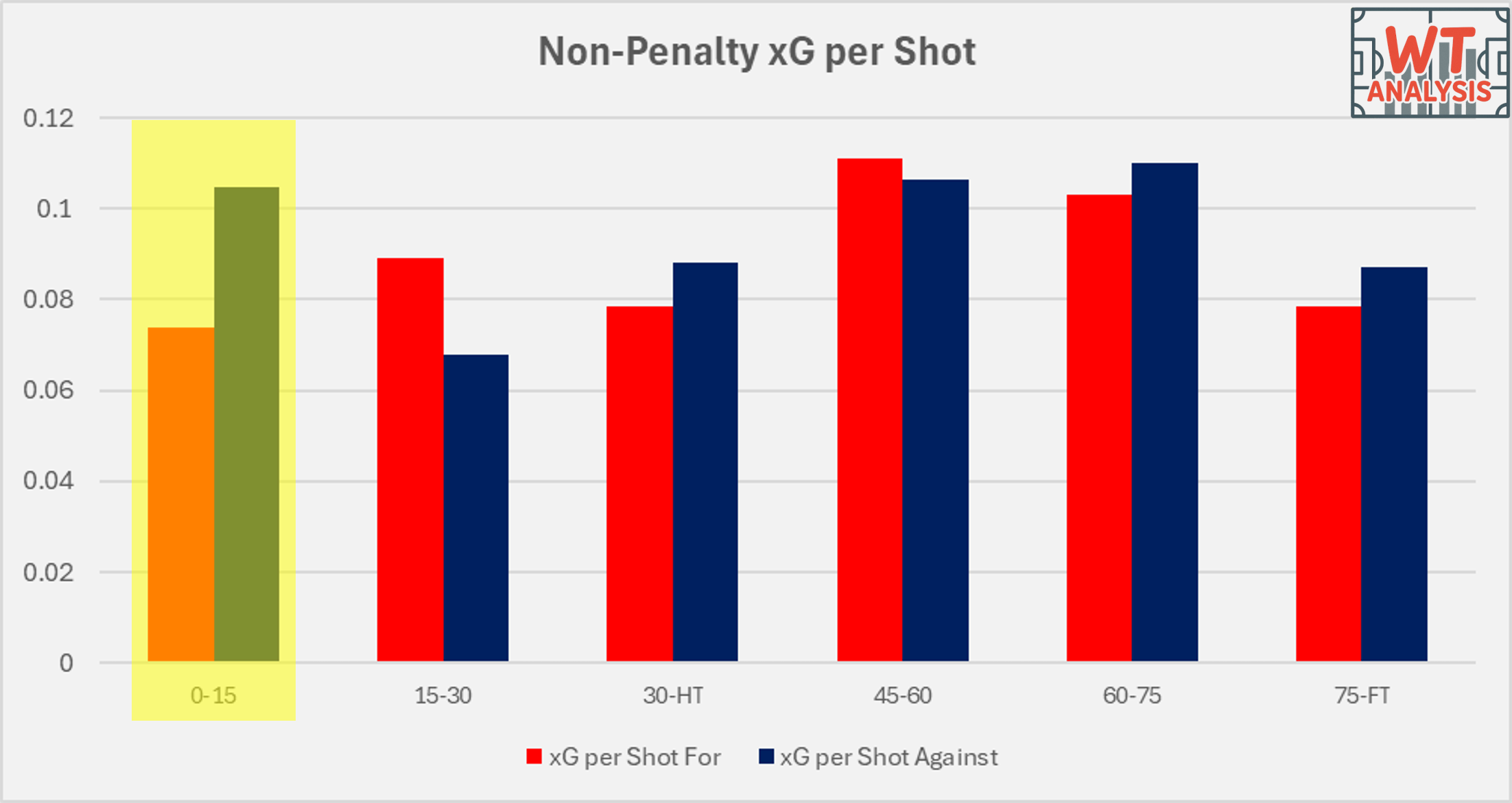
This is where things start to get a bit worrying - under Dyche Forest give up relatively high-quality chances in the first 15 minutes, despite the intention they have to try and keep things tight. It’s up for debate as to whether this tactic is to try and stop this from happening, or if it’s a by-product of Forest sitting back and not taking initiative (which is my personal view).
I also find it very interesting that both Forest and their opponents have a high chance quality at the beginning of the second half. We’ve seen Forest be effective in this period under Dyche (Man Utd, Liverpool, Tottenham etc.), but they’ve also been stung here in recent games too. Does that again give a reason as to why Dyche tries to keep things tight?
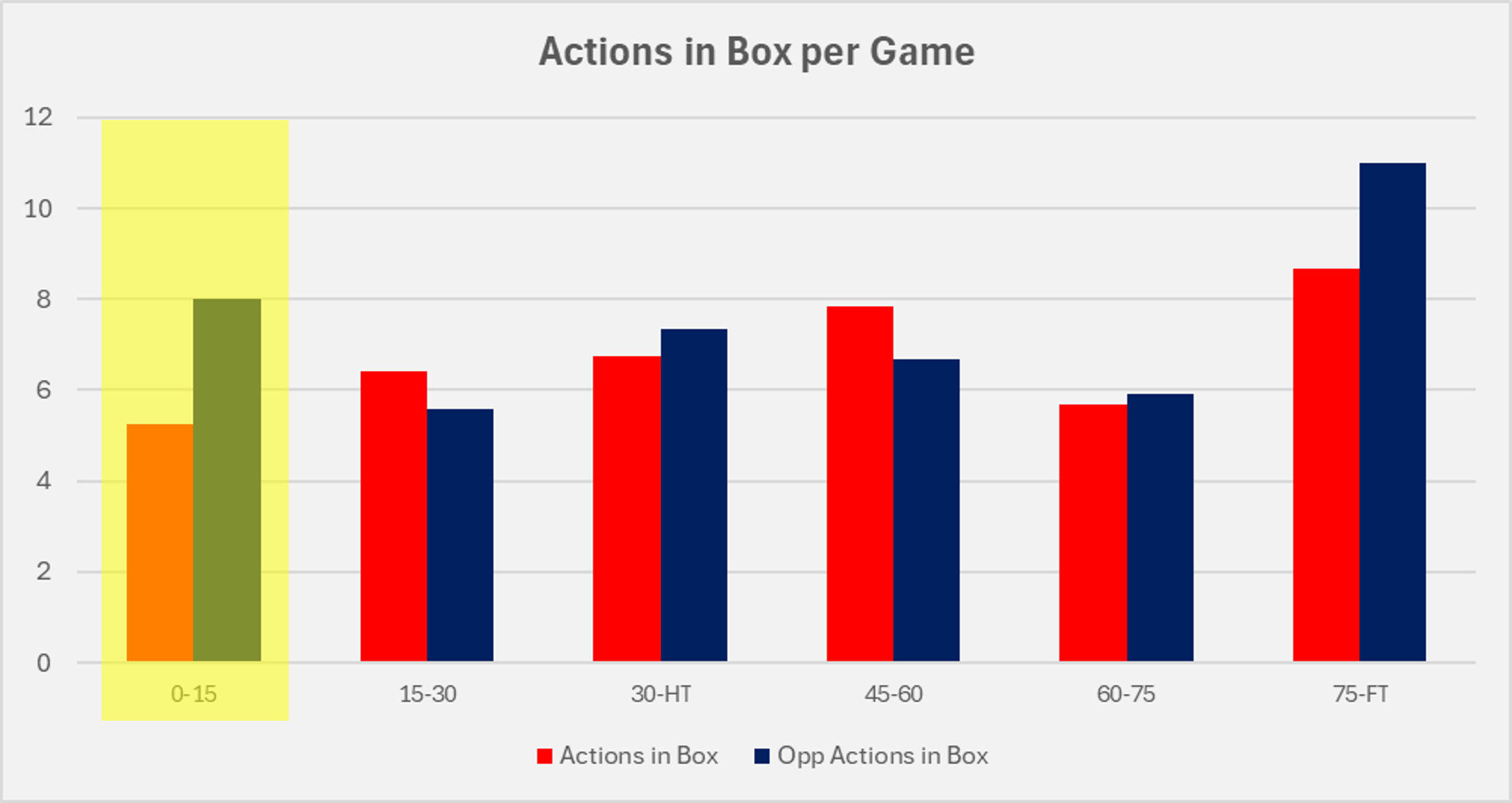
This chance quality is likely related to the number of touches opponents get in Forest’s box in those first 15 minutes - averaging 8 per game. We also see Forest’s lowest figure out of all the segments (just over 5). The high figures we see at the end of games is caused by team’s chasing a positive result, but more so due to the large amounts of injury time being played.
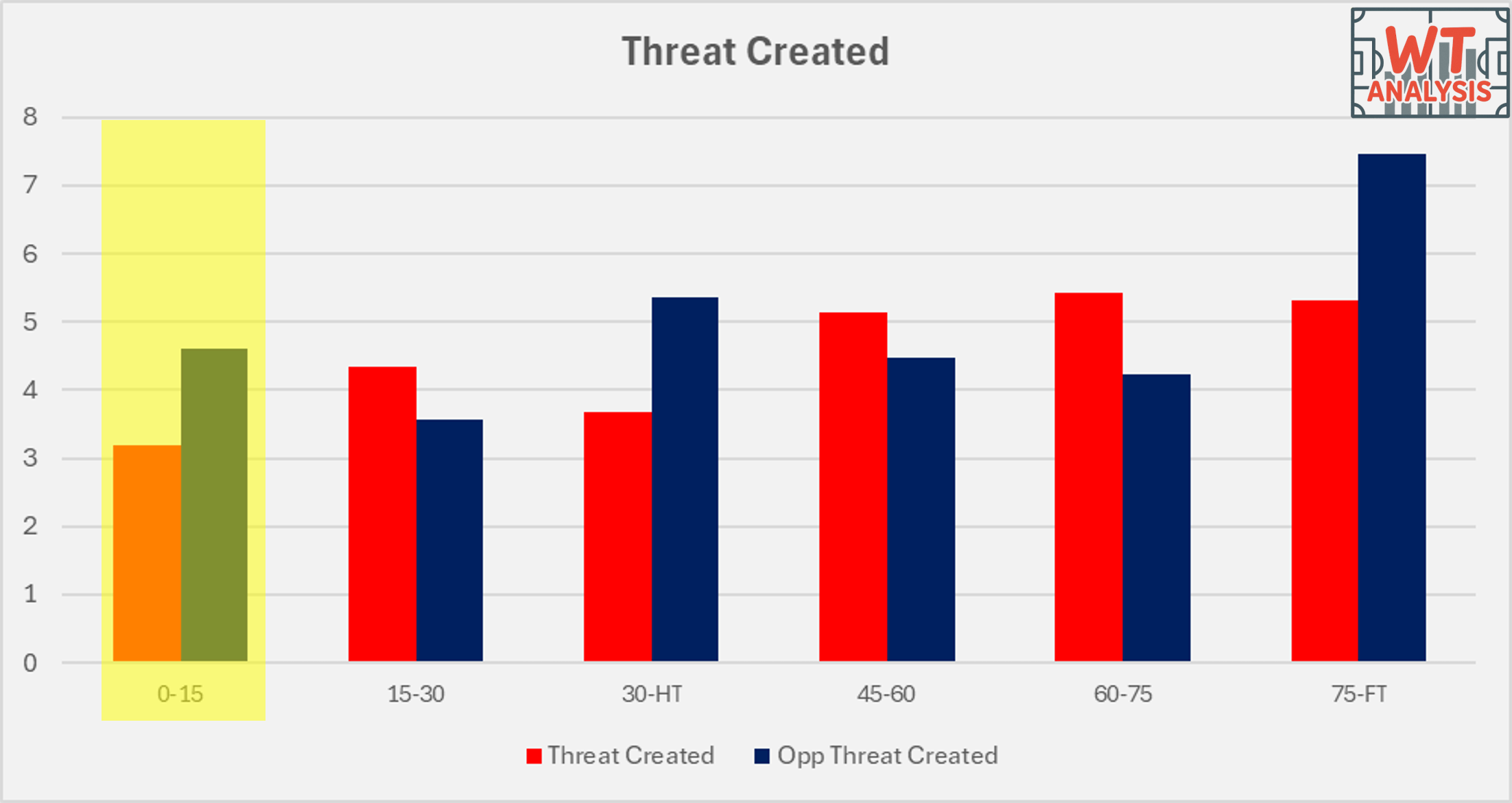
All of this kind of adds up when we look at the data through my Threat Creation metric - for this visual only taking into account Passes & Ball Carries. Forest show little intent to progress the ball into dangerous areas in the first 15 minutes, thus inviting their opponents onto them.
At the end of the first half, we’ve seen Forest try to up the intensity a little, their opponents begin to find it easier to put the ball into areas that threaten Forest. As mentioned above, this period toward the end of first halves has been Forest’s big issue in the recent poor run of form.
Goals Scored & Conceded
Perhaps because Forest are so passive early in games, they’re outscored by 2 goals to 4 in the opening 30 minutes. Then, in that period just before half-time, Forest under Dyche have been outscored by an incredibly poor 6 goals to 1.
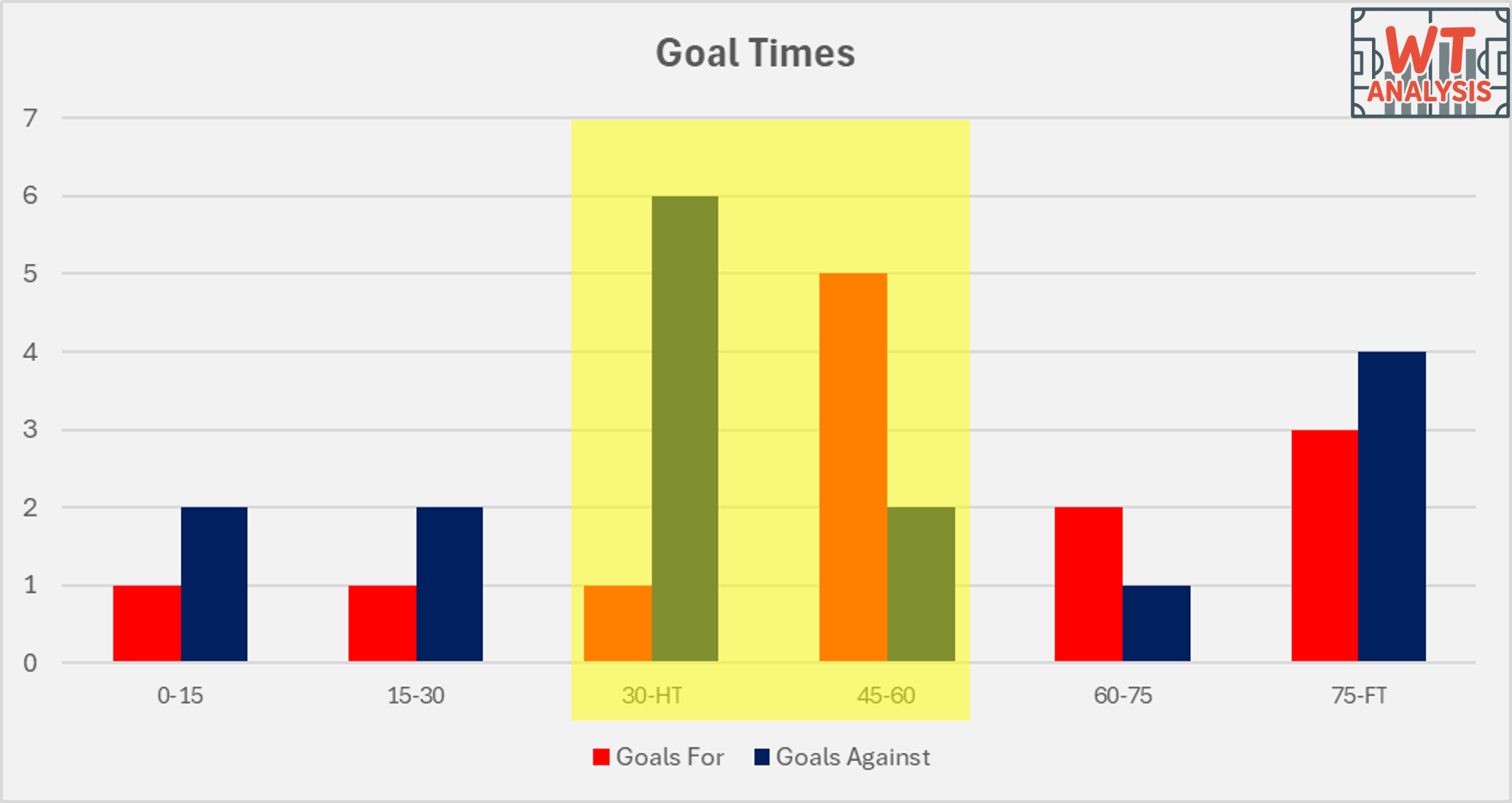
Then, after the half-time break, Dyche tends to get a response out of his side, outscoring opponents 5 goals to 2, and then again by 2 goals to 1 between 60 & 75 minutes. Forest do get outscored in the final period of games, but Man City aside this has been as Forest have been trying to chase games (to varying degrees of danger & success).
Conclusions
To me both the data and the eye test point toward Dyche giving a classic “let’s keep it tight early on boys” for the first half an hour. Opponents still find it too easy to access dangerous areas though, couple that with Forest’s struggles (or perhaps lack of intent) to progress the ball to dangerous areas, and that is generally only going to end one way.
This period just before half-time has been a killer recently - take the first 45 minutes against Aston Villa for example, Forest’s attacking intent was close to zero. As we know Forest then concede a poor goal that had been coming from the opening minute.
Last season, Forest were built on solid foundations with an ability to really harm opponents on the counter attack with the pace of Elanga and the finishing of Wood. This season, Ndoye hasn’t yet been able to replace Elanga’s threat, and for all Igor Jesus’ brilliant work up front he has not ever looked like a true finisher. For that reason, I think it’s incumbent upon Dyche and the coaching staff to try and set Forest up in a more proactive way early in games as opponents are still finding it too easy to cause problems.
Hutchinson, on the ball at least, has been a shining light for Forest this season. His skillset though is completely different to Elanga’s - we’ve seen already at times in this campaign that Forest can play through the lines quickly through the likes of Gibbs-White & Anderson and fashion themselves good chances.
If Dyche is to persist with passive starts and more direct football, then in my opinion he needs to switch up the system slightly, get someone much closer to Igor Jesus, and perhaps move Gibbs-White to the left in a 4-4-2. This would obviously mean in the short-term we’re probably looking at Awoniyi up top partnered with Jesus - although it was interesting that at times Ndoye has been asked to operate centrally close to the striker, so I wonder if he is being considered as an option when he returns to fitness due to his pace and surprising physicality when backing into defenders.
Whatever way he decides to go, one thing is for sure in that we need to see a vastly improved performance in all phases of the game tomorrow night. It might not be a ‘must-win’ but it’s absolutely a ‘must-not-lose’ against a poor West Ham side full of frailties and lacking in confidence. Tonight’s result will go a long way to determining Dyche’s immediate short-term future at The City Ground.